Finding Your Footing in the Morning
Imagine stepping out of bed on a cool morning. Your feet hit the floor, and for the first few steps, you feel a slight stiffness. Maybe you steady yourself against the nightstand, waiting for your joints to find their rhythm. This brief moment of hesitation is incredibly common, yet we rarely talk about the foundation of our entire movement system: our ankles and feet. Prioritizing daily ankle mobility for balance is one of the most practical ways to maintain confidence, stability, and freedom of movement as we navigate our middle and later years.
Our feet are mechanical marvels, boasting dozens of joints, bones, ligaments, and muscles working in perfect concert. They are the only part of our body in constant contact with the earth when we walk. Yet, because they are tucked away in shoes for most of the day, they often lose their natural flexibility. When our ankles stiffen, our stride shortens, our balance shifts, and simple daily tasks like descending a flight of stairs or walking on an uneven garden path can feel slightly more challenging than they used to.
The Science of Daily Ankle Mobility for Balance
To understand why this area of the body is so critical, it helps to look at how our nervous system communicates with our environment. The soles of our feet and the tissues surrounding our ankle joints are densely packed with tiny sensory receptors called proprioceptors. These receptors act like a natural GPS, sending rapid-fire signals to the brain about where our body is in space, the texture of the ground, and how we need to adjust our weight to stay upright.
When ankle joints become stiff, this communication highway slows down. The brain receives delayed or slightly muddled signals, making it harder to adjust to a sudden slip, a loose rug, or a cracked sidewalk. Incorporating deliberate, gentle movements into your routine helps keep these joints supple and ensures that the communication between your feet and your brain remains sharp and responsive. Regular practice helps maintain the necessary range of motion to safely walk, climb, bend, and stand for extended periods.
Simple Routines to Build Your Daily Ankle Mobility for Balance
Improving your foundation does not require long hours at a gym or specialized equipment. In fact, some of the most effective ways to nurture your feet can be seamlessly woven into things you are already doing. Here are three simple, low-impact habits that can be practiced in the comfort of your own home.
1. Seated Coffee-Time Circles
Your morning routine is the perfect anchor for a quick joint-warming session. While you sit comfortably with your morning tea or coffee, lift one foot slightly off the floor. Slowly trace the letters of the alphabet in the air with your big toe, or draw ten large, smooth circles in one direction, followed by ten in the opposite direction. Repeat this process with your other foot.
This movement gently lubricates the ankle joint by encouraging the flow of synovial fluid, which acts as a natural joint cushion. It also wakes up the small muscles that control side-to-side stability, prepping your feet for the day ahead before you even stand up.
2. The Bathroom Counter Calf Stretch
While brushing your teeth or waiting for water to heat up, use the bathroom counter for support to stretch your calves and Achilles tendons. Step one foot back, keeping your heel pressed firmly into the floor and your back leg straight. Gently bend your front knee until you feel a soft, comfortable stretch in the calf of your back leg. Hold this position for twenty to thirty seconds, keeping your breath slow and steady, then switch sides.
Tight calf muscles are a primary contributor to limited ankle flexibility. When these muscles are tight, they pull on the heel bone, restricting the forward movement of the shin over the foot during a normal walking stride. Keeping them lengthened directly supports a natural, fluid gait.
3. Active Toe Spreads on the Living Room Rug
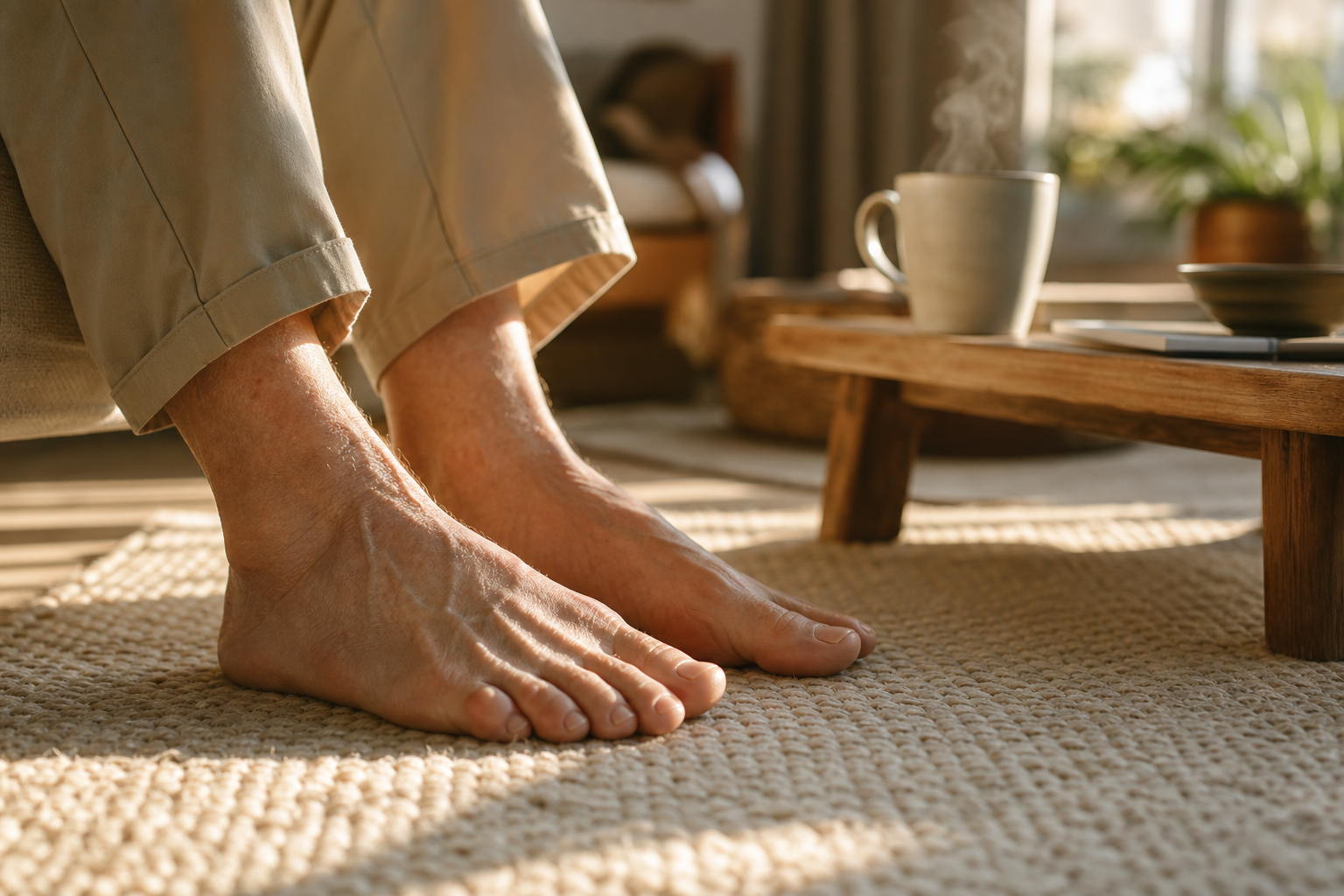
Spend a few minutes barefoot on a soft, supportive rug. Sit comfortably in a chair, place your feet flat on the floor, and try to spread your toes as wide apart as possible, like opening a fan. Hold the spread for five seconds, then relax. Repeat this five times. If your toes do not seem to move much at first, do not worry; the mental connection alone is highly beneficial, and physical flexibility will gradually improve over time.
Spreading your toes helps widen your base of support. Think of it like snowshoes: a wider surface area provides better distribution of weight and improved stability. It also engages the intrinsic muscles on the bottom of the foot, which support the arches and absorb shock with every step you take.
How Small Changes Create Real Stability: Richard’s Story
To see how these tiny habits translate to daily life, consider the experience of Richard, a sixty-two-year-old retired high school teacher who loves tending to his backyard vegetable garden. A year ago, Richard noticed he felt increasingly hesitant when carrying heavy watering cans over his slightly sloped lawn. He felt a mild stiffness in his ankles, which made him feel less secure on uneven grass.
Rather than giving up his gardening, Richard decided to focus on his foundations. He began practicing the coffee-time circles and counter calf stretches every single morning. He also made a habit of spending ten minutes walking barefoot on his living room carpet. Within a few weeks, the morning stiffness began to ease. He noticed that his ankles felt more responsive when stepping over hoses or walking on loose soil. Today, Richard moves through his garden with the same steady, comfortable confidence he enjoyed years ago, proving that small, daily investments in our physical self pay rich dividends over time.
Gentle Cautions for Safe Movement
While focusing on your feet is incredibly beneficial, it is important to listen closely to your body and move with patience. Joint care should never feel painful. If you experience a sharp, pinching sensation, a throbbing ache, or sudden swelling in your ankles or feet, stop the exercises immediately. Gentle stretching should produce a mild, warming sensation, not discomfort or strain.
If you have a history of severe balance issues, neuropathy, recent foot surgery, or severe arthritis, always speak with a healthcare provider or a physical therapist before starting a new routine. They can offer tailored modifications to ensure you are moving safely and effectively within your physical capabilities.
Prioritizing Your Foundation for Long-Term Confidence
Keeping our balance is not just about keeping our legs strong; it is about keeping our connection to the ground flexible and responsive. By spending just a few minutes each morning warming up your ankles and stretching your feet, you are giving your nervous system the clear signals it needs to keep you steady. Start tomorrow morning with a few simple ankle circles while your morning beverage brews, and enjoy the feeling of stepping forward with steady, confident strides.
References
- National Institute on Aging – Balance Exercises for Older Adults
- Harvard Health Publishing – The Importance of Ankle Mobility for Stability
- Mayo Clinic – Foot and Ankle Health as We Age
- American Heart Association – Active Aging and Mobility
This blog content is for informational purposes only. For accurate guidance about your personal health, please consult a qualified healthcare professional.
Comments
Post a Comment