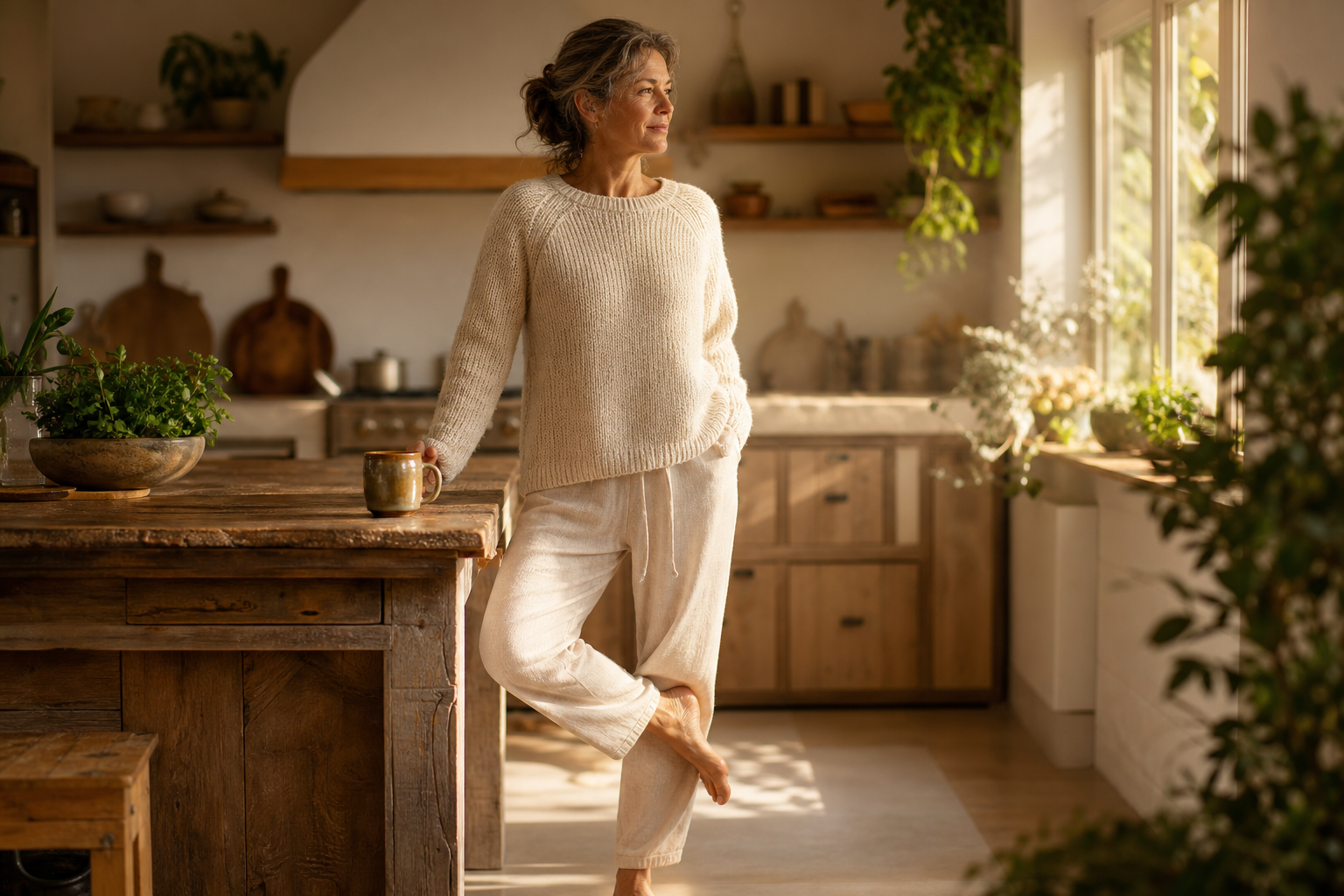
Why Daily Balance Habits Matter for Lifelong Mobility
Around the world, millions of people start their day with a remarkably similar ritual: waiting. We wait for the kettle to whistle, the coffee maker to drip, or the toaster to pop. These quiet, unstructured moments often feel like empty spaces in our mornings. Many of us instinctively reach for our phones, scrolling mindlessly through emails or news headlines before our day has even fully begun. Yet, these brief windows of time offer an extraordinary, untapped opportunity to nurture our physical well-being. By integrating simple daily balance habits into these brief kitchen moments, we can gently and effectively support our lifelong mobility without adding a single chore to our busy schedules. Balance is not a static trait that we either possess or lack; it is a dynamic skill, a complex conversation between our sensory nervous system and our skeletal muscles. As we navigate the decades beyond age thirty, paying proactive attention to this system becomes a cornerstone of vibrant, independent living.
To understand why stability deserves our attention, it helps to look at how our bodies keep us upright. Balance is a sophisticated team effort. It relies on our vision to map our surroundings, our inner ear's vestibular system to detect motion and direction, and a lesser-known sense called proprioception. Proprioception is often described as our body's internal GPS. It is the complex network of sensory receptors located within our muscles, joints, and tendons that constantly tells our brain where our limbs are in space. In our twenties, this system operates with sharp, automatic efficiency. However, as we blow past our thirties, forties, and fifties, the natural aging process can quietly dull these sensory signals. Muscle mass naturally declines, a process known as sarcopenia, and joint flexibility can stiffen, particularly in our ankles and hips. This gradual change is often so subtle that we only notice it when we experience a sudden stumble on an uneven sidewalk or feel slightly unsteady when reaching for a high shelf. The excellent news is that our balance system remains highly responsive to training at any age. Just as we can strengthen a bicep through regular lifting, we can sharpen our proprioceptive feedback loops and fortify our stabilizing muscles through consistent, low-intensity practice. By committing to small daily balance habits, we are not just practicing a physical posture; we are actively remodeling the neural pathways that keep us sure-footed, confident, and resilient in our everyday environments.
Practical Daily Balance Habits for Your Kitchen Routine
The kitchen counter is an exceptional environment for balance practice. It is sturdy, always at a comfortable waist height, and placed right in the heart of our daily routine. This eliminates the barrier of needing specialized gym equipment or setting aside dedicated workout time. Here are three safe, gentle, and highly effective daily balance habits you can introduce during your morning routine.
The Kitchen Counter Single-Leg Stand
Begin by standing tall with your feet hip-width apart, resting both hands lightly on the edge of your clean kitchen counter. Gradually shift your weight onto your left foot, ensuring your knee remains soft rather than locked. Slowly lift your right foot a few inches off the floor, keeping your hips level and your posture tall. Hold this position for fifteen to thirty seconds while breathing smoothly. If you feel steady, you can experiment with reducing your support. Transition from a full handhold to placing only a few fingertips on the counter, then perhaps hovering your hands just an inch above the surface. Repeat the process on the other leg. This exercise directly challenges the lateral stabilizers of your hips and ankles, which are vital for side-to-side stability.
Heel-to-Toe Rocking
This motion is perfect for those moments when you are waiting for a toaster or microwave timer. Stand with your feet hip-width apart, holding the counter gently. Slowly roll up onto the balls of your feet, lifting your heels high and engaging your calves. Hold for a brief second, then smoothly lower your heels back to the floor and gently lift your toes, shifting your weight onto your heels. Continue rocking forward and backward in a slow, controlled rhythm for ten repetitions. This habit strengthens the lower legs and improves ankle flexibility, which is crucial for recovering your footing if you ever trip.
The Tandem Line Stand
Imagine you are standing on a tightrope. Place your right foot directly in front of your left foot, so that the heel of your front foot is touching, or nearly touching, the toes of your back foot. Hold the counter for initial support, stand tall, and find a steady focal point across the room. Attempt to hold this position for twenty seconds before switching feet. This narrower base of support forces your core and deep postural muscles to engage, training your brain to maintain center alignment under challenging conditions.
Stability in Action: A Real-Life Example
Consider the story of David, a sixty-two-year-old retired print coordinator from Ohio. David loved spending his weekends hiking local trails and working in his garden, but he began noticing a subtle change in his physical confidence. When stepping over small tree roots or turning quickly to grab a gardening tool, he felt a fleeting sensation of vulnerability, as if his feet were not landing exactly where he intended. Rather than resigning himself to this change, David decided to utilize his morning routine. Every day, while waiting three minutes for his French press coffee to brew, he practiced the single-leg counter stand. In the beginning, he relied heavily on both hands for support. Within a month of daily balance habits, David found he could balance on either leg for thirty seconds with only a single finger touching the counter. This quiet kitchen practice translated directly to his outdoor passions. On his weekend hikes, his steps felt lighter and more precise, and he regained the carefree confidence of his younger years, demonstrating how microscopic daily changes compound into profound physical freedom.
Gentle Cautions for Safe Progress
While improving your balance is incredibly rewarding, safety must always remain your highest priority. When practicing these daily balance habits, always ensure your kitchen floor is completely dry and free of clutter or loose rugs. Never attempt these exercises without a sturdy, immovable surface like a countertop or heavy dining table within arm's reach. If you experience any dizziness, lightheadedness, or sharp pain in your joints, immediately stop the exercise and sit down. It is normal to feel a gentle wobble in your ankles—this is actually a sign that your nervous system is actively working to correct your posture—but you should never feel as though you are on the verge of falling. Avoid closing your eyes during these exercises unless you are an advanced practitioner with a doctor's clearance, as removing visual feedback significantly increases the difficulty and risk of a fall.
A Balanced Path Forward
Incorporating daily balance habits into your morning does not require a dramatic lifestyle overhaul or hours of exhausting exercise. It is about reclaiming the small, overlooked pockets of your day and turning them into gentle investments in your future self. By utilizing the simple safety of your kitchen counter, you can build a solid foundation of stability that supports your physical independence for decades to come. Start tomorrow morning with just a single thirty-second stand while your kettle heats up. Over time, you will likely find that this small window of physical awareness becomes one of the most grounding and rewarding parts of your daily routine.
References
- National Institute on Aging – Balance Exercises
- Harvard Health Publishing – Balance Training
- Mayo Clinic – Balance Training for Older Adults
This blog content is for informational purposes only. For accurate guidance about your personal health, please consult a qualified healthcare professional.
Comments
Post a Comment