Understanding How Ankle Mobility for Balance Protects Your Joints
Imagine stepping out of your front door on a crisp autumn morning. The air is fresh, and you are ready for a pleasant walk around your neighborhood. But as you step off the curb, you feel a brief moment of hesitation. That sudden, minor wobble can shake your confidence. Many of us naturally assume that this slight unsteadiness is just an inevitable part of getting older, but that is rarely the case. Our feet and ankles form the foundation for every step we take. When we walk, step off a curb, or navigate a gravel pathway, our ankles act as natural shock absorbers and stabilizers. Over the years, however, many of us notice a subtle shift in how steady we feel. We might find ourselves looking down more often while walking, or feeling slightly hesitant on uneven ground. While many people focus on knee or hip strength to address this, the true key often lies lower down. Improving ankle mobility for balance is one of the most effective and overlooked ways to support natural, confident movement throughout our lives.
The ankle is a complex structure designed to move in multiple directions. It needs to bend upward, point downward, and tilt slightly from side to side to adapt to the surfaces beneath us. When these joints become stiff, the body is forced to compensate. The knees and hips must work harder to absorb the impact of each step, which can lead to discomfort further up the body. By dedicating just a few minutes each day to foot and ankle care, you can restore natural movement patterns, protect your joints, and walk with greater ease.
The Hidden Connection Between Your Ankles and Stability
Every time you take a step, sensory receptors in your feet and ankles send rapid-fire messages to your brain about where your body is in space. This sensory system is known as proprioception. When ankle joints are stiff or weak, these signals can become delayed or less clear. Improving your ankle mobility for balance helps keep these pathways sharp. Think of your ankle like a hinge on a door. If the hinge is rusted, the door is difficult to open smoothly. When you keep the hinge lubricated and strong, the entire door functions effortlessly, allowing you to move through your day with steady grace.
Daily Habits to Enhance Ankle Mobility for Balance
Building better stability does not require hours of intense exercise. Instead, the most effective approach involves small, consistent habits integrated into your existing daily routine. Here are four practical habits you can start today to support your joint health.
Habit 1: The Kitchen Counter Balance Practice
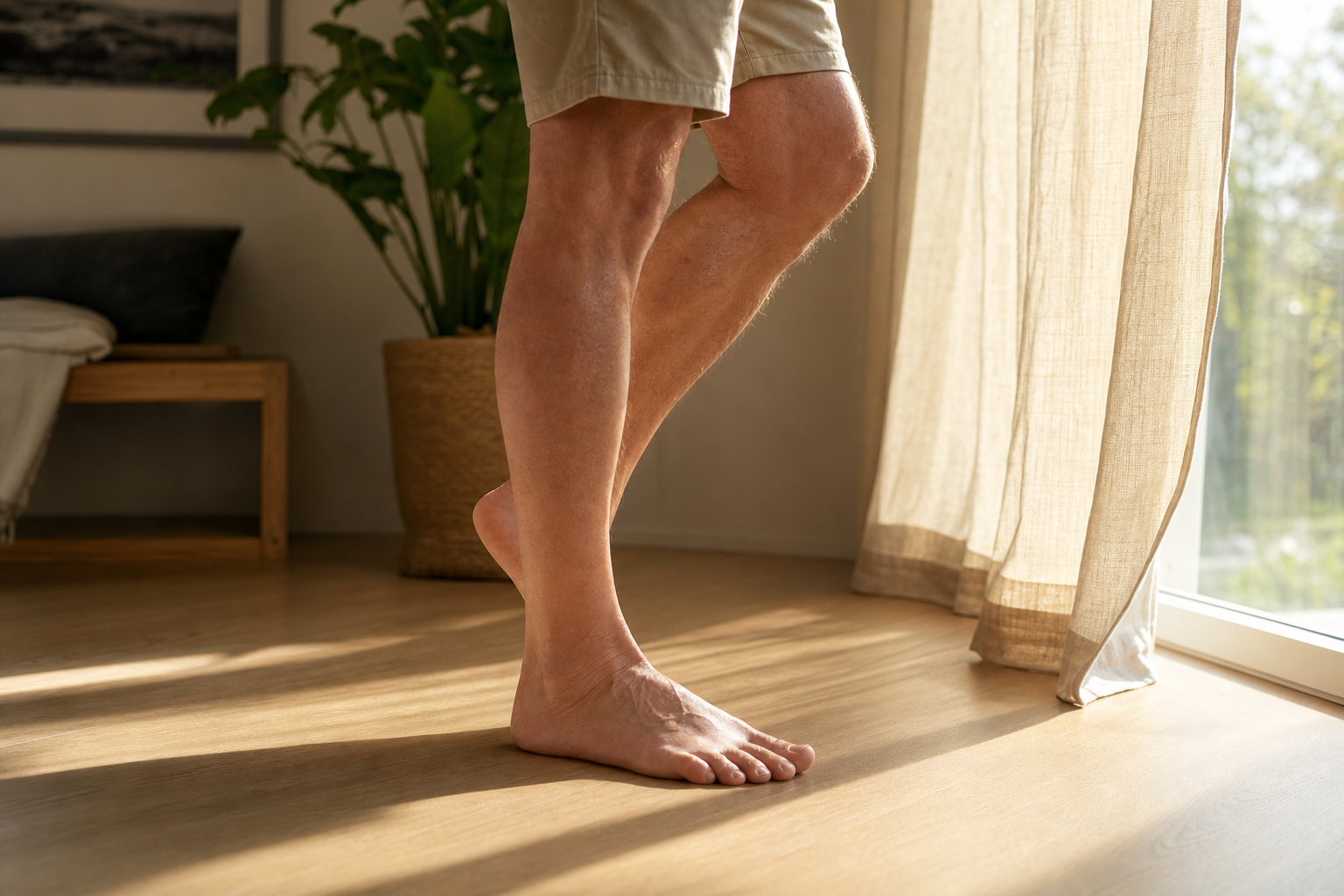
An excellent way to build strength and awareness is to practice balancing on one foot during moments when you are already standing. While waiting for water to boil or brushing your teeth, stand near a sturdy counter or heavy chair. Gently lift one foot slightly off the floor and hold the position for thirty seconds. Keep a light touch on the counter for safety if needed. This simple practice forces the small stabilizer muscles in your ankle and foot to make micro-adjustments, building strength and improving ankle mobility for balance over time. Switch feet and repeat once or twice.
Habit 2: Seated Ankle Alphabets
You can easily practice this habit while reading the morning paper or watching your favorite evening show. Sit comfortably in a chair with your feet flat on the floor. Lift one leg slightly and use your big toe as a pen to trace the letters of the alphabet in the air. Focus on making the movements as large and smooth as possible, rotating your ankle through its full range of motion. Once you finish the alphabet, repeat the process with the other foot. This gentle habit stimulates the joint fluid, helping to lubricate the ankle and reduce stiffness after periods of sitting.
Habit 3: The Wall-Supported Calf Stretch
Tight calf muscles are a common cause of ankle stiffness, restricting the ankle's ability to bend upward naturally. To release this tension, stand facing a wall about arm's length away. Place your hands on the wall for support. Step your right foot back, keeping the heel flat on the floor and the leg straight. Gently bend your front left knee until you feel a comfortable stretch in the calf of your back leg. Hold this stretch for thirty seconds, breathing deeply and keeping your posture upright. Repeat on the other side. This daily stretch helps maintain the flexibility needed for a smooth, natural walking stride.
Habit 4: Active Towel Curls for Foot Strength
The muscles in the arch of your foot work closely with your ankle to maintain stability. To strengthen these muscles, sit in a chair and place a small hand towel flat on the floor in front of you. Place your bare foot on the edge of the towel. Using only your toes, slowly scrunch and pull the towel toward you, curling your arch as you do so. Repeat this three times per foot. This simple exercise builds the foundational support your ankles need to function optimally.
Understanding the Timing: When to Practice
For these movements to become a natural part of your life, try pairing them with existing habits. This concept, known as habit stacking, makes consistency effortless. You do not need to set aside dedicated exercise hours. Practice your calf stretches while waiting for your evening tea to steep, or complete your ankle circles while sitting at your desk during afternoon breaks. By weaving these small actions into your typical day, you build a sustainable foundation for joint comfort without disrupting your schedule.
Arthur's Path to Steadier Walks
To see how these small changes work in everyday life, consider Arthur, a sixty-two-year-old retired high school teacher. Arthur loved taking weekend walks in his local park, but he began noticing that walking on grass or gravel made him feel nervous. He found himself staring at his feet to avoid tripping, which took the joy out of his outdoor time. He realized that stiffness in his calf muscles had slowly restricted his foot movement over several years, leading to that heavy, flat-footed feeling. After learning about the importance of ankle mobility for balance, Arthur decided to make a few small adjustments. He started practicing single-leg balances while waiting for his morning coffee to brew and did ankle circles while watching the news. Within six weeks, Arthur noticed a remarkable difference. He felt more grounded, his steps felt lighter, and he was able to walk along the park trails with his head up, fully enjoying the scenery once again. Arthur's experience shows that consistency, rather than intensity, is the key to lasting mobility.
Moving Forward Safely
While improving your ankle mobility for balance is highly beneficial, it is essential to approach these exercises with mindfulness. Always listen to your body and avoid pushing through sharp or sudden pain. If you have a history of severe ankle sprains, fractures, or joint conditions like arthritis, it is wise to start gently and consult with a physical therapist to design a customized plan. Always ensure you have a sturdy wall, counter, or heavy chair nearby to support yourself during balance exercises to prevent falls. True physical wellness is a gradual journey, and patience is your best companion.
References
- National Institute on Aging – Balance Exercises for Older Adults
- Harvard Health Publishing – Simple Exercises for Foot and Ankle Health
- Mayo Clinic – Balance Training for Better Stability
This blog content is for informational purposes only. For accurate guidance about your personal health, please consult a qualified healthcare professional.
Comments
Post a Comment