The Foundation of Confident Movement
We walk thousands of steps every day, yet we rarely consider the complex foundation carrying us forward. Our feet contain an intricate network of bones, joints, and small muscles that work together to absorb shock and maintain balance. Over time, supportive footwear and flat indoor surfaces can cause these small muscles to become underutilized. Restoring foot strength is a quiet but powerful way to enhance natural stability, improve joint alignment, and keep our movements smooth and comfortable through the years.
The Structural Benefits of Restoring Foot Strength
Our feet are the only contact point we have with the ground, acting as the primary sensors for our entire body. When the intrinsic muscles of the feet weaken, other joints like ankles, knees, and hips must work harder to compensate. This shift can lead to subtle alignment issues and joint discomfort during normal walking. By actively restoring foot strength, we help maintain the natural arch of the foot, which acts as a built-in shock absorber. A stronger foundation supports better posture and confident, steady steps during daily activities.
Simple Habits for Restoring Foot Strength and Stability
We can build reliable foot strength using simple, low-impact habits that easily fit into a morning or evening routine.
The Short-Foot Arch Lift
To try this habit, sit comfortably in a chair with your bare feet flat on the floor. Without curling your toes, try to pull the ball of your foot toward your heel, slightly lifting the arch of your foot. Hold this gentle contraction for five seconds, then release. This movement targets the deep stabilizing muscles of the arch.
Towel Scrunches
Place a small hand towel flat on a smooth floor. Sit down, place your bare foot on the edge of the towel, and use your toes to gently scrunch the fabric toward you. Repeat this simple action a few times with each foot to build active toe flexibility and coordination.
Texture Awareness Walks
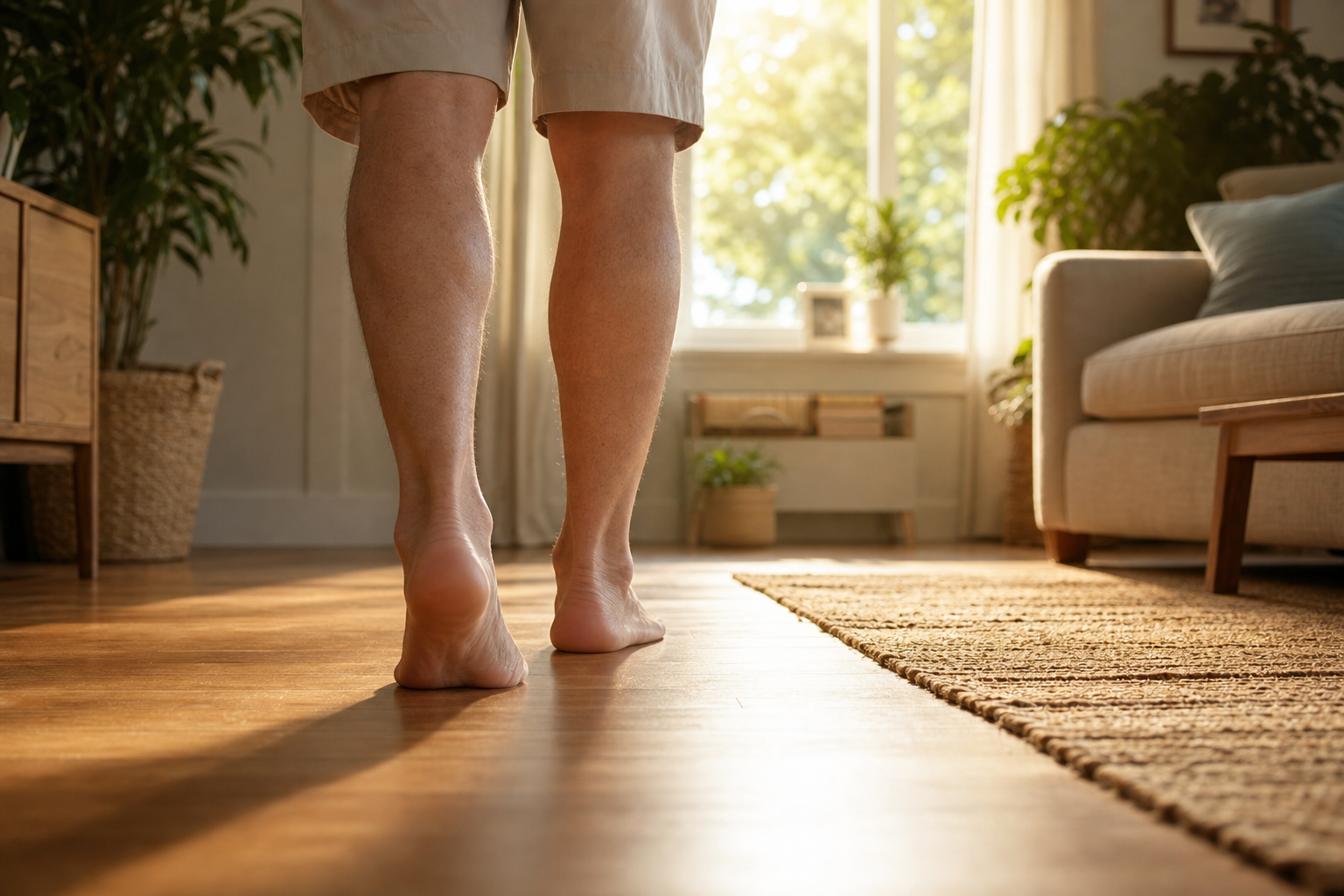
Whenever safe, spend a few minutes walking barefoot on natural or textured surfaces inside your home, such as a textured rug, carpet, or a clean wooden floor. This practice stimulates the sensory nerves on the soles of your feet, improving your brain's connection to your balance sensors.
A Real-Life Example of Foot Engagement
Consider the daily habit of standing at the kitchen counter. Instead of shifting all your weight onto one hip or leaning heavily against the counter, try standing with both feet flat and gently pressing your toes into the floor. This simple change distributes your weight evenly, engages your core, and can leave your lower back feeling much fresher after preparing a meal.
A Gentle Note on Safety
While building stability is highly beneficial, progress should always be gentle and gradual. If you experience active pain, severe numbness, or are recovering from a recent foot injury, it is best to avoid new exercises. Listening to your body is key to sustainable physical wellness.
Taking Your First Step Today
You can begin supporting your stability right now. Take two minutes today to slide off your shoes and spread your toes as wide as comfortable, holding for a few seconds. It is a simple, refreshing habit that invites circulation and natural awareness back into your foundation.
This blog content is for informational purposes only. For accurate guidance about your personal health, please consult a qualified healthcare professional.
Comments
Post a Comment