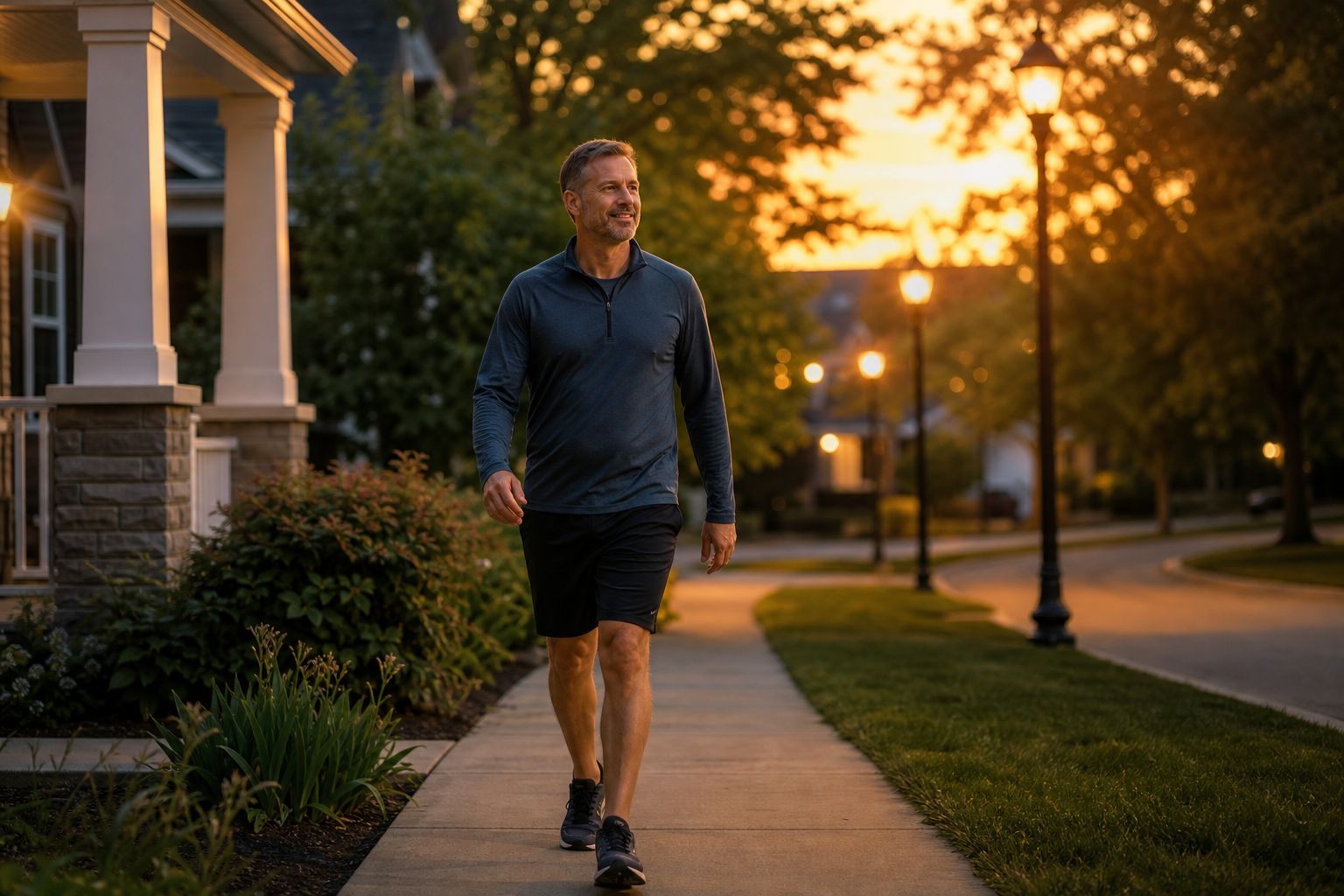
The Science Behind Walking After Dinner Heart Health
As the sun sets and dinner winds down, there is a natural temptation to move directly from the dining table to the living room couch. While a comfortable evening of rest is appealing, introducing a small shift in your post-meal pattern can offer remarkable benefits. Incorporating a short stroll into your evening is one of the most accessible blood pressure habits you can adopt. Choosing a light routine focused on walking after dinner heart health can gently support your cardiovascular system while assisting your digestion. For adults navigating middle age and beyond, this simple transition helps bridge the gap between daytime activity and nighttime rest. It requires no special gym equipment, no intense exertion, and only a few minutes of your time. By making this small adjustment, you can turn a passive evening hour into an active window of physical support.
When we finish a meal, our bodies go to work. The digestive system requires blood flow to process nutrients, and glucose levels in the bloodstream temporarily rise. For many adults, especially those focusing on cardiovascular wellness, managing these post-meal spikes is a priority. Taking a light walk shortly after eating helps muscles absorb glucose, which reduces the demand on the pancreas and helps maintain stable blood sugar levels. This process indirectly supports your blood pressure habits by reducing vascular strain.
A gentle walking routine also encourages blood vessels to dilate, improving overall circulation. Rather than forcing the heart to work harder to pump blood through constricted vessels while digesting, a light stroll promotes a steady, efficient cardiovascular flow. This digestive and circulatory partnership makes the post-meal walk particularly beneficial for heart health. It is not about burning calories or pushing physical limits; it is about working in harmony with your body natural digestive rhythm.
Three Evening Habits to Enhance Your Walking After Dinner Heart Health Routine
To make this evening practice both sustainable and safe, it helps to break it down into concrete, repeatable steps. Here are three practical approaches to establish a supportive walking routine after your evening meal.
Habit One: The Ten-Minute Comfort Pace
The first step is simply to establish consistency rather than distance. This habit involves stepping outside for just ten minutes, roughly fifteen to thirty minutes after finishing your evening meal. The focus here is a comfortable, conversational pace. You should be able to speak in full sentences without feeling breathless. This light movement assists with early digestion and gently lowers blood pressure. To try this safely, choose a familiar, flat path near your home and wear supportive, flat shoes. If you feel any sudden tightness in your chest, severe shortness of breath, or dizziness, stop immediately and seek medical advice.
Habit Two: The Post-Meal Digestion Stroll
This habit focuses on the digestive benefits of physical movement. Instead of sitting immediately after eating, allow your body to remain upright and gently active. A slow walk for fifteen minutes helps move food through the digestive tract more efficiently, which can reduce common discomforts like bloating or nighttime acid reflux. To implement this safely, avoid power walking or jogging. High-intensity exercise right after eating diverts too much blood away from the stomach, which can cause cramping. Keep the pace leisurely, like an easy window-shopping stroll. If you experience persistent abdominal pain or nausea, that is a clear sign to slow down, head home, and rest.
Habit Three: The Evening Wind-Down Walk
The third habit combines physical heart support with mental relaxation. Stress can elevate heart rate and blood pressure, making it harder to transition into restful sleep. A quiet evening walk serves as a mental buffer, allowing you to process the day and let go of tension. Walk without your phone or choose a quiet neighborhood street where you can focus on your surroundings. Focus on deep, regular breathing. To practice this safely at dusk or after dark, ensure your path is well-lit, wear reflective clothing, and walk in familiar areas. If you feel excessively tired or stiff, shorten the walk to five minutes or reschedule for the following day.
How to Maintain a Safe and Joyful Walking Routine
Adopting a new physical habit is easiest when you prepare for success. Try putting your walking shoes near the front door before you sit down for dinner. This small visual cue serves as a gentle reminder when dinner is over, helping you bypass the temptation of the television or couch. You can also make this a social connection by inviting a partner, friend, or neighbor to join you. It turns a health-focused habit into an enjoyable evening ritual.
While walking is generally a low-risk activity, always prioritize safety. Avoid walking in extreme weather, whether too hot or too cold, as temperature extremes can place extra strain on your cardiovascular system. If you have existing heart conditions or have been sedentary for a long period, speak with a doctor before starting a new walking routine. Listen to your body signals. Walking should feel restorative, not exhausting. If you feel persistent fatigue the next morning, your body might be asking you to reduce the duration or pace of your stroll.
Your One Small Step for Tonight
You do not need to commit to an hour of walking to support your cardiovascular system. Tonight, after you finish your evening meal, simply stand up, step outside, and walk for just five minutes in one direction, then five minutes back. This simple ten-minute commitment is an excellent way to start protecting your heart, improving digestion, and building a habit that lasts a lifetime.
References
- American Heart Association – Physical Activity and Heart Health Resources
- Mayo Clinic – Exercise and Healthy Aging Guidelines
- Harvard Health Publishing – Benefits of Walking for Cardiovascular Wellness
This blog content is for informational purposes only. For accurate guidance about your personal health, please consult a qualified healthcare professional.
Comments
Post a Comment