Easing the Daily Weight on Your Lower Body
Many of us return home after a long day feeling a distinct, heavy sensation in our lower legs. Whether you spend your daytime hours standing on unforgiving hard surfaces, navigating active errands, or sitting at a desk for long periods, gravity works quietly against your body. Over the hours, this constant downward pull can lead to subtle fluid retention, a feeling of tightness in the calves, and tired, aching ankles. Developing a simple, consistent evening leg elevation habit offers a gentle, natural way to counter these daily physical strains, restoring a sense of ease to your lower joints and preparing your body for a restful night.
Why Gravity Matters for Lower Body Wellness
As our bodies mature, our circulatory systems naturally work a bit harder to perform their daily duties. The veins in our legs must pump blood upward against gravity to return it to the heart, relying on small one-way valves and the rhythmic contraction of our calf muscles. Over the years, these valves can become slightly less efficient, and prolonged sitting or standing can cause fluid to accumulate in the tissues of the lower legs. This pooling, though common and often benign, can place extra pressure on your ankle and knee joints, leading to a feeling of stiffness and overall fatigue. By adopting an evening leg elevation habit, you allow gravity to work in your favor, assisting venous return and encouraging the natural movement of lymphatic fluid.
Three Key Benefits of the Evening Leg Elevation Habit
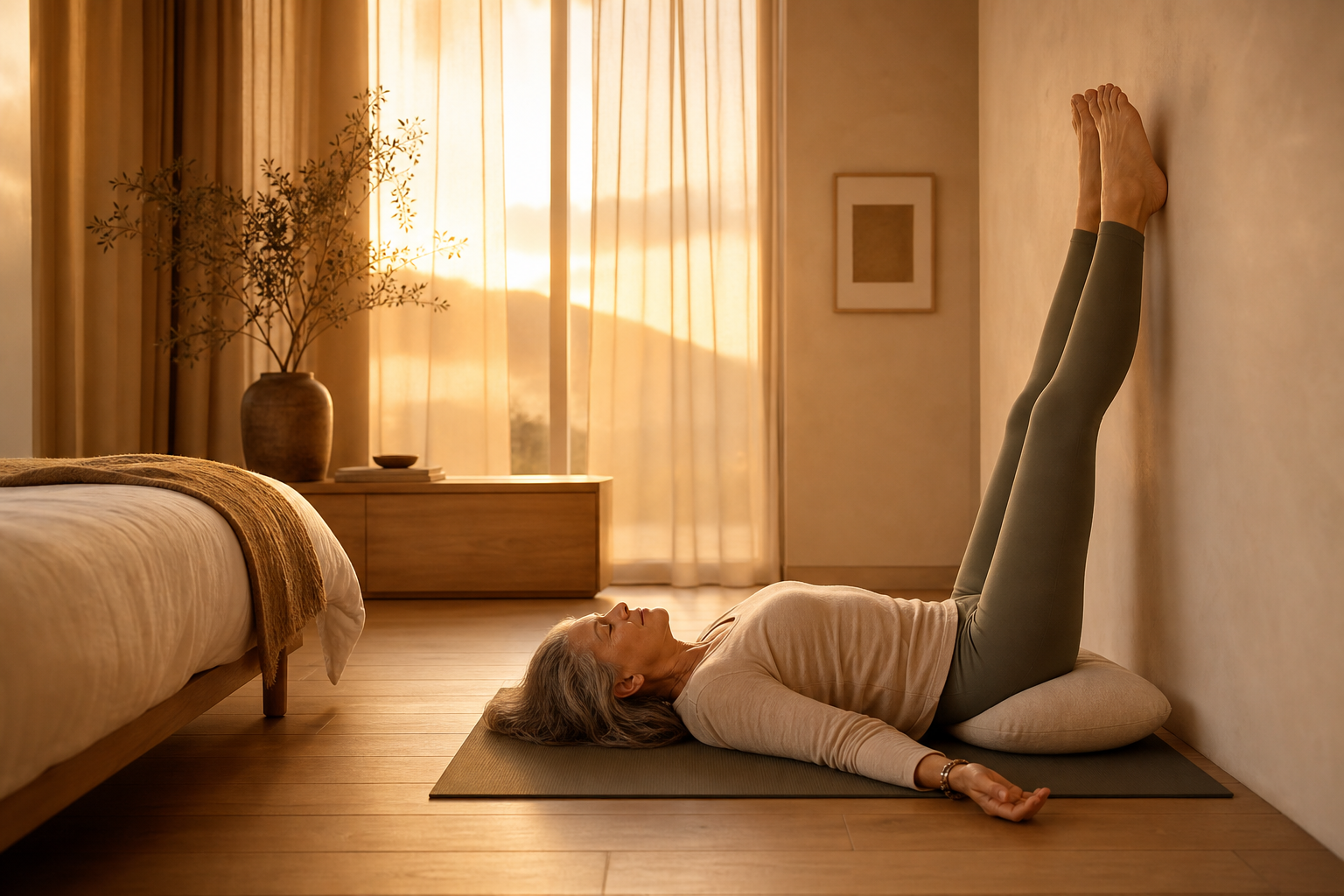
Integrating this restorative practice into your nighttime routine offers three distinct benefits that support daily mobility and overall comfort. First, it helps ease fluid build-up and joint tension. When you raise your feet above the level of your heart, the accumulated fluid in your lower extremities naturally drains back toward your torso, relieving the physical pressure around your ankle joints and calves. Second, the habit promotes deep relaxation of the lower back. Lying flat with elevated legs flat against a wall or supported by cushions flattens the lumbar spine, offering a passive stretch that can soothe tired, overworked lower back muscles. Third, this practice supports natural circulation before sleep. By lowering the workload on your cardiovascular system, your body can transition more smoothly into a calm, parasympathetic state, setting the stage for deep, undisturbed rest.
How to Practice Safely at Home
You do not need any special equipment to begin enjoying this relaxing practice. There are three simple, accessible ways to introduce this habit into your evening wind-down routine, allowing you to choose the option that feels most comfortable for your body. The first variation is the classic wall-supported stretch. To try this, place a soft yoga mat or a folded blanket on the floor near a clear wall space. Gently lower your back to the floor while swinging your legs upward to rest your heels against the wall. Keep your hips a few inches away from the wall to prevent excessive strain on your hamstrings. The second variation is the couch cushion comfort method. If your hamstrings feel tight, rest your calves flat on the seat of a comfortable sofa or armchair while your back rests on a supportive rug on the floor, creating a comfortable ninety-degree bend at your knees. The third variation is the bedside pillow stack. For a gentler angle, simply prop your legs on two or three firm pillows at the foot of your bed, elevating them slightly above your heart as you prepare to sleep. Spend about ten minutes in your chosen position, breathing slowly and deeply.
Real-Life Examples of Evening Routines
Let us look at how this small habit can fit seamlessly into everyday life. Consider Arthur, a fifty-eight-year-old retired teacher who spends several hours each afternoon working in his home garden. He often noticed a persistent, dull throb in his ankles by dinner time, which made settling down for the night difficult. Arthur decided to start spending ten minutes with his legs elevated on a stack of cushions while reading a chapter of his book before bed. Within a week, he noticed his ankles felt lighter, and his legs felt noticeably less restless during the night. Similarly, Sarah, a sixty-two-year-old administrative assistant who sits at a desk for much of the day, found that dedicating ten minutes to the wall-supported leg elevation habit after her evening walk helped ease the lower back tightness she often experienced after hours of sitting. These simple, realistic shifts show how taking a few moments to rest can have a positive carryover effect into the next day.
Gentle Cautions and Safety Limits
While an evening leg elevation habit is a highly restorative and gentle practice, it is always wise to listen to your body and recognize when a modification is necessary. If you experience any tingling, numbness, or a cold sensation in your feet while elevating them, gently lower your legs and allow the circulation to normalize. Individuals with certain health concerns, including untreated high blood pressure, congestive heart failure, severe leg swelling of sudden onset, or acute lower back injuries, should consult a qualified healthcare professional before beginning this practice. Your comfort is the primary guide, and a smaller, gentler elevation is often just as beneficial as a full vertical stretch.
A Simple Step for Tonight
The beauty of this daily wellness practice lies in its absolute simplicity. You do not need to commit to a long, exhausting routine to support your physical well-being. Tonight, as you prepare to wind down for sleep, find a comfortable spot on your rug or your bed, stack a few pillows under your calves, and rest quietly for ten minutes. Let your muscles relax, focus on steady breathing, and allow your body to gently recover from the day.
References
- National Institute on Aging – Balance and Physical Wellness
- Harvard Health Publishing – Managing Peripheral Circulation
- Cleveland Clinic – Physical Benefits of Leg Elevation
This blog content is for informational purposes only. For accurate guidance about your personal health, please consult a qualified healthcare professional.
Comments
Post a Comment