Have you ever stepped off a curb and felt a sudden, brief wobble? Or perhaps you noticed a slight drift when walking across a grassy lawn at a local park. It is easy to blame these moments on fatigue, distraction, or uneven ground. However, the true culprit often lies much lower than you might think. Many adults overlook a fundamental pillar of walking stability and daily movement: the state of their ankles.
When we think about staying upright and active, we often focus on core strength, hip flexibility, or knee health. Yet, your ankles are the literal foundation of your entire body. They act as the first line of defense against unexpected trips and slips. If you want to maintain your mobility for decades to come, understanding the connection between ankle strength balance is essential.
The Natural Shift: Why Ankle Strength Balance Changes Over Time
As the decades progress, our bodies undergo quiet, natural changes that can affect how we move. One of the most significant changes happens in our lower joints. The ankles contain a dense network of sensory receptors called mechanoreceptors. These tiny sensors act like a built-in GPS, constantly sending rapid signals to your brain about where your feet are positioned in space. This sensory feedback loop allows you to make micro-adjustments when you step on a loose pebble or an uneven sidewalk.
With passing years, however, these receptors can become less sensitive. At the same time, joint cartilage can stiffen, and the muscles surrounding the ankle may lose a bit of their natural mass and responsiveness. When you combine this with sedentary habits or spending most of your time in stiff, highly cushioned shoes that do not require the ankle to do much work, the joint essentially goes to sleep. The result is a gradual decline in walking stability, which often goes unnoticed until a close call or a sudden stumble occurs.
Focusing on ankle strength balance is not about performing intense athletic training. Instead, it is about keeping these vital joints responsive, flexible, and strong enough to support your daily adventures. Proactive care here is one of the most effective strategies for fall prevention, ensuring you can navigate stairs, gravel paths, and busy streets with total confidence.
Simple Daily Habits to Improve Your Ankle Strength Balance
The beauty of training your ankles is that it does not require special equipment or hours of dedicated gym time. You can easily weave these highly effective, gentle habits into your existing daily routine.
1. The Kitchen Counter Single-Leg Stand
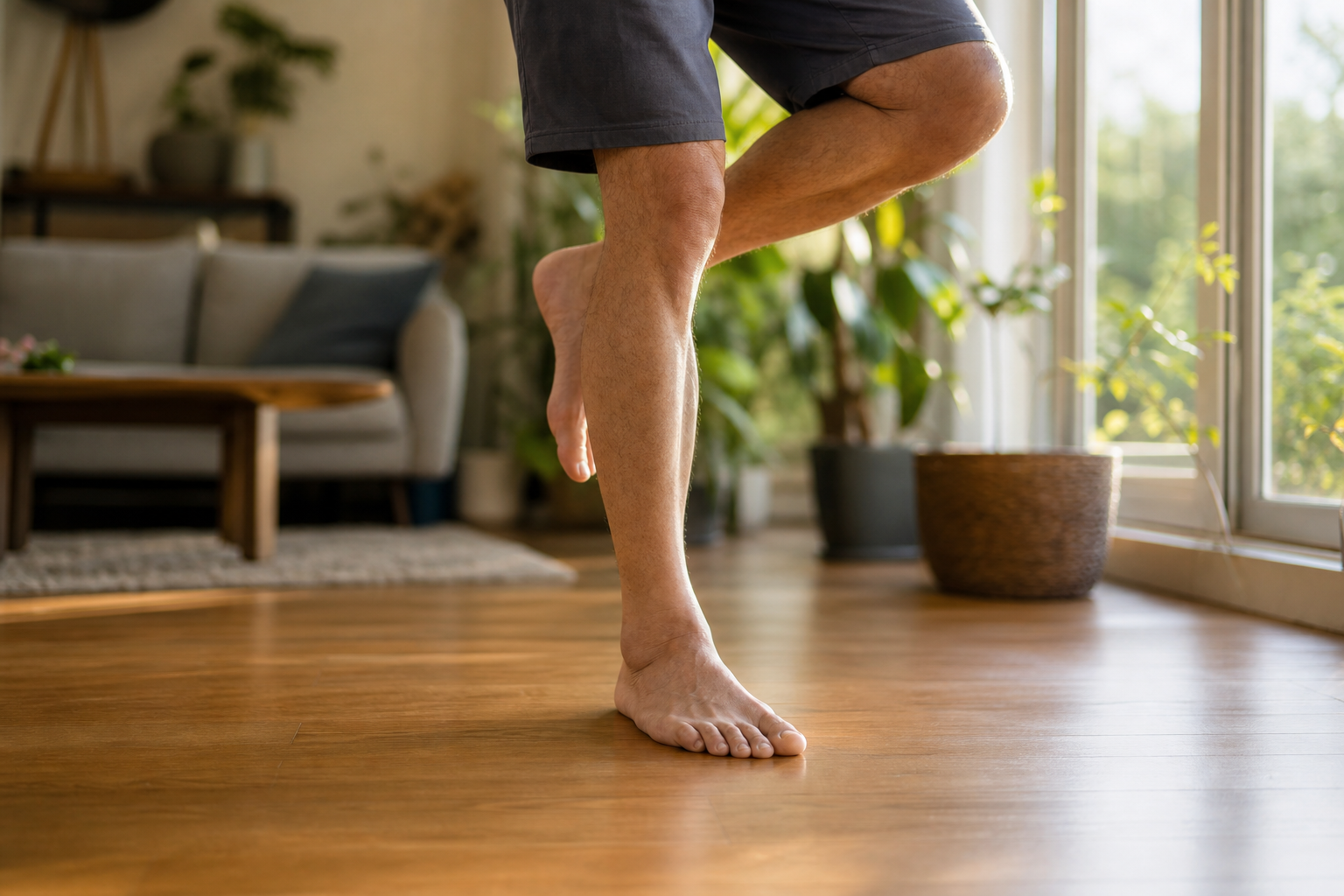
This simple exercise directly targets walking stability by challenging the small stabilizing muscles around your ankle joint. To try this safely, stand near your kitchen counter or a sturdy dining chair. Place one hand lightly on the surface for support. Lift one foot a few inches off the floor and try to balance on the other leg for thirty seconds. As you stand, you will likely feel your ankle making tiny, rapid movements. This is a sign that those sleepier sensory receptors are waking up and doing their job. Repeat this on the other side. If you feel steady, you can try lifting your hand off the counter, but always keep it close by just in case you need to catch yourself.
2. Morning Coffee Heel-to-Toe Rockers
You can practice this movement while waiting for your morning tea to steep or your coffee to brew. Stand with your feet hip-width apart, holding onto the edge of a counter for safety. Slowly lift your heels off the ground so you are standing on the balls of your feet, hold for a brief second, and then lower them. Next, gently lift your toes off the ground so your weight shifts back onto your heels. Rock back and forth in a slow, controlled rhythm ten to fifteen times. This habit strengthens both the calf muscles and the muscles on the front of your shins, which are vital for lifting your toes properly to avoid tripping over rugs or thresholds.
3. The Sitting Alphabet Stretch
This is an excellent option for when you are relaxing on the couch or sitting at your desk. Lift one foot off the floor and use your big toe as a pen to draw the letters of the alphabet in the air. Focus on making the movements come entirely from your ankle, not your knee or hip. Once you reach the letter Z, switch to the other foot. This gentle habit increases the range of motion in the joint and promotes healthy circulation, making it a perfect low-impact way to start your morning or wind down before bed.
Recognizing the Limits and Staying Safe
While improving your joint mobility is incredibly beneficial, safety should always be your top priority. If you experience any sharp pain, throbbing, swelling, or a feeling of joint laxity during these exercises, stop immediately. It is worth noting that persistent dizziness, regular lightheadedness, or frequent unexplained falls may point to issues beyond simple muscle weakness, such as inner ear imbalances or neurological changes. If you experience these symptoms, or if you are recovering from a past injury, it is highly recommended to consult a physical therapist or a qualified healthcare professional. They can provide a personalized assessment to ensure you are moving safely.
By incorporating these small, intentional movements into your week, you are making a profound investment in your future self. Keeping your ankles strong and responsive ensures that you can continue to walk, run, garden, and play with ease, maintaining your vibrant independence for many years to come.
References
- National Institute on Aging – Balance and Fall Prevention
- Harvard Health Publishing – Strength and Stability Exercises
- Mayo Clinic – Balance Training and Mobility
This blog content is for informational purposes only. For accurate guidance about your personal health, please consult a qualified healthcare professional.
Comments
Post a Comment