Why Hip Flexibility and Lower Back Comfort Go Hand in Hand
Many of us have experienced that familiar, dull ache in the lower back after a pleasant afternoon walk or a long period of sitting at a desk. When this discomfort arises, our natural instinct is to stretch, rub, or blame our back muscles. However, the true culprit is often located just below the pelvis. Cultivating hip flexibility and lower back comfort is not just about stretching; it is about understanding how these two major areas of the body work in tandem to support your daily movement. When your hip joints lose their natural range of motion, your lower back is forced to compensate, taking on extra work that it was never designed to handle. By focusing on a few gentle, daily habits to restore freedom to your hips, you can relieve this unnecessary burden and bring comfort back to your favorite activities.
The Mechanical Connection
To understand this relationship, we can look at how the body is built. The hip is a ball-and-socket joint, engineered by nature to move in multiple directions. It can rotate, glide, swing forward, and stretch backward. In contrast, the lower back, or lumbar spine, is built primarily for stability. It is meant to support your weight and protect your spinal cord, not to twist or bend excessively. When your hips are supple, they absorb the impact of walking, climbing stairs, and standing up. However, when we spend hours sitting in chairs or driving, our hip joints become stiff. Over the years, the body adapts to these patterns. The muscles at the front of the hips, known as the hip flexors, shorten and tighten. Meanwhile, the large gluteal muscles in the back become inactive.
Think of your pelvis as the foundation of a house. If the foundation is perfectly level, the structure built on top of it stands tall and straight with minimal effort. But if the foundation tilts even slightly to one side or forward, every beam and wall above it must adjust to prevent the house from leaning. In the human body, your pelvis is that foundation, and your spine is the house. Tight hip flexors act like strong cables pulling the front of your pelvis downward. When this anterior pelvic tilt occurs, your lower back must curve sharply inward to keep your head and chest upright. This curved position compresses the facet joints of your spine and pinches the surrounding muscles, leading to chronic fatigue and soreness in your lower back. By restoring length to those tight front hip cables, you allow your pelvis to drop back into a neutral, level position. This instantly relieves the compressive pressure on your lumbar spine, allowing your back muscles to relax.
The Ripple Effect of Stiff Hips in Daily Life
Stiffness in the hips does not just impact long walks; it changes how we move through every part of the day. You might notice it when stepping out of a car, bending down to tie your shoes, or reaching for an item on a low shelf. When the hips cannot bend easily, the body finds another way to complete the movement. Usually, this means rounding the lower back, which puts immense pressure on the delicate discs of the spine.
Consider the experience of Sarah, a fifty-two-year-old schoolteacher who loves spending her weekends gardening. After spending years sitting at her desk grading papers, she began to notice a persistent ache in her lower back whenever she spent more than twenty minutes tending to her flowerbeds. She assumed her back was simply growing weaker with age and considered giving up her hobby.
Fortunately, a local physical therapist helped Sarah see the situation differently. The therapist pointed out that Sarah's hips were almost completely locked from her hours of desk work. When she bent down to garden, her hips remained rigid, forcing her lower back to do all the bending. Sarah began practicing two simple hip-opening habits each morning. Within a few weeks, the pressure on her lower back vanished. She was able to return to her garden, bending and moving with a level of comfort she had not felt in years. Sarah's story illustrates that our bodies are highly interconnected systems, and addressing the root cause can restore joy to our daily routines.
Gentle Daily Habits to Support Hip Flexibility and Lower Back Comfort
You do not need hours of intense exercise to improve your mobility. Instead, consistency is the key. By integrating these three gentle habits into your daily routine, you can encourage your hips to move freely and support your lower spine.
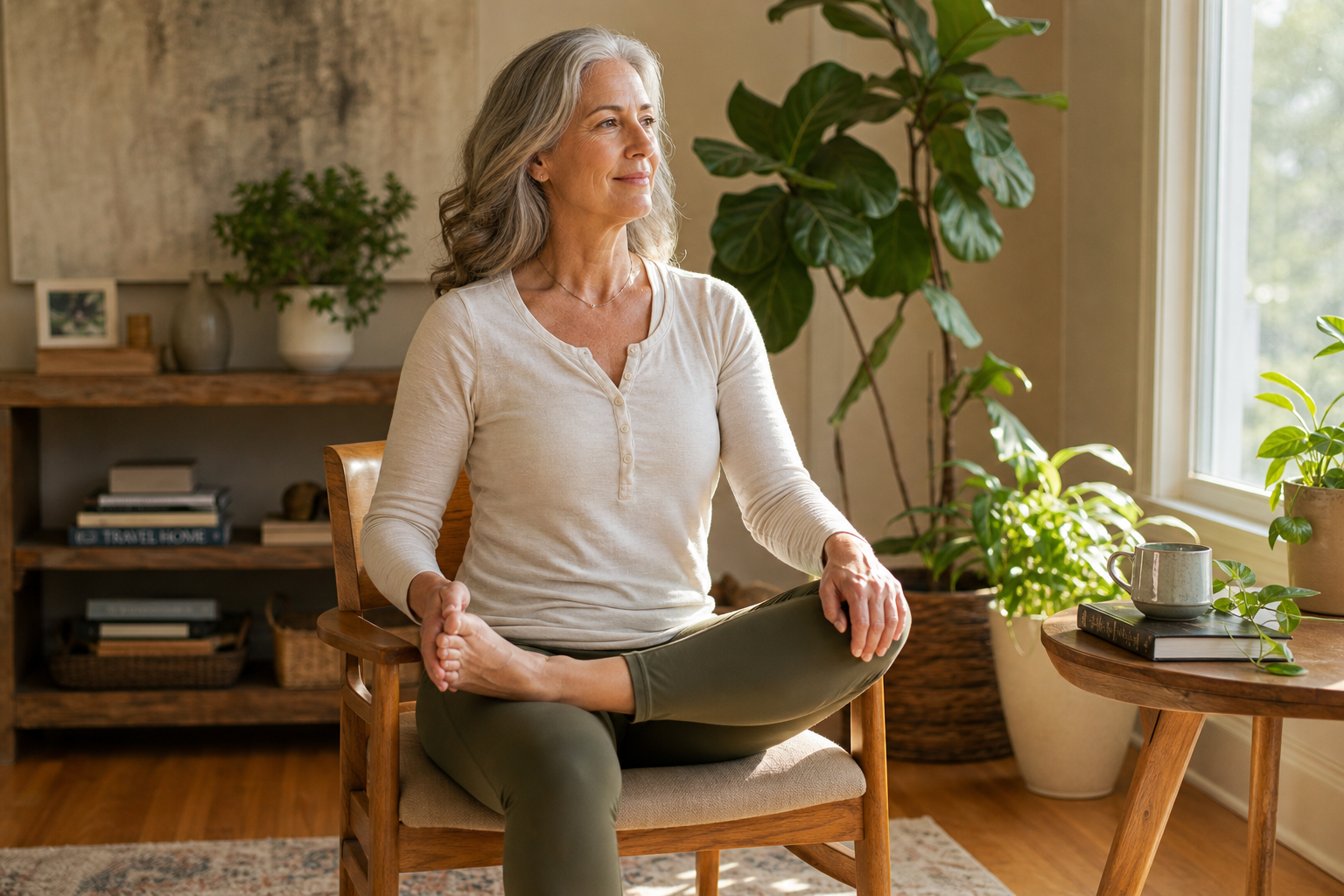
Habit 1: The Seated Figure-Four Stretch
This habit is incredibly convenient because you can do it right at your kitchen table or desk. To make this habit stick, pair it with a daily trigger. For example, you might decide to perform this stretch every time you finish lunch, or right before you log off your computer for the evening. When you link a new movement to an existing habit, it becomes second nature.
Sit tall in a sturdy chair with your feet flat on the floor. Lift your right ankle and gently place it across your left knee, creating a shape that looks like the number four. Keep your spine long and tall. Instead of rounding your shoulders, gently hinge forward from your hips, moving your chest toward your shin. You should feel a mild, warming stretch in your outer hip and glute. Hold this position for thirty seconds while breathing deeply, then slowly release and repeat on the other side. As you hinge forward, focus on keeping your chest open and your collarbones wide. This prevents your upper back from rounding, ensuring that the stretch remains focused entirely on your outer hip. Take five deep, slow breaths. With each exhalation, imagine the tension in your hip melting away. You might find that one side is significantly tighter than the other; this is completely normal and simply highlights where your body has been compensating.
Habit 2: The Gentle Low Lunge
This movement specifically targets the hip flexors at the front of your thigh. A wonderful way to practice this is during a commercial break while watching your favorite evening show, or while waiting for your morning coffee to brew. If you find that kneeling on the floor is uncomfortable for your knees, you can modify this into a standing crescent lunge.
Stand next to a sturdy wall, kitchen counter, or heavy chair for balance. Step your left foot back into a comfortable stride. Slowly lower your hips, allowing your front knee to bend. If you feel comfortable doing so, you can lower your back knee to a soft mat on the floor; otherwise, keep your back heel lifted and your knee slightly bent. Gently tuck your tailbone under, as if you are trying to point your belt buckle upward. This subtle pelvic tilt is the secret to feeling a deep, safe stretch along the front of your left hip. Hold for twenty to thirty seconds, maintaining a tall torso, then switch sides. Remember, the goal is not to stretch as deeply as possible, but rather to find a mild, sustainable release. Engaging your lower abdominal muscles slightly during this stretch can also help stabilize your pelvis and enhance the opening in the front of your hip.
Habit 3: Mindful Glute Engagement During Walks
Mobility is not just about stretching; it is also about teaching your muscles how to work together. The beauty of this habit is that it requires no extra time out of your day. Whether you are walking through the grocery store, heading to the mailbox, or taking a stroll around the block, you can practice this mindful connection.
When you take a step forward, focus on the leg that is behind you. As you push off the ground with your back foot, give the glute muscle on that side a gentle squeeze. This simple action naturally pulls the front of your hip open, promoting extension. It also takes the workload off your lower back and places it onto the powerful muscles of your buttocks, which are designed to propel you forward. To feel this engagement, imagine pushing the ground away behind you with each step. This subtle push-off activates the glutes and hamstring muscles, which naturally opens up the hip joint at the front. Over time, this conscious pattern becomes an automatic reflex, permanently changing the way you walk for the better.
Listening to Your Body and Moving Safely
While improving your flexibility is a wonderful goal, your safety should always come first. Every body is unique, and what feels like a pleasant stretch for one person might feel uncomfortable for another. When practicing these movements, always listen to the signals your body sends.
A safe stretch should feel like a mild, comfortable release of tension. It should never feel sharp, pinching, or painful. If you experience pain in your knee, groin, or lower back during any of these habits, back off immediately. Keep in mind that some individuals need to take extra care. If you have undergone a hip replacement, have severe arthritis, or are currently recovering from an acute lower back injury, certain movements may not be suitable for you. In these situations, it is highly recommended to speak with a healthcare provider or a physical therapist who can tailor a program specifically to your needs. Patience is a vital part of wellness; gentleness will always yield better long-term results than trying to force your body into a position before it is ready.
Embracing Easier Movement Every Day
Restoring comfort to your lower back does not require a dramatic lifestyle shift. By dedicating just five to ten minutes a day to gentle hip habits, you can create a positive ripple effect throughout your entire body. As your hips regain their natural freedom of movement, you will likely find that standing, walking, and enjoying your favorite hobbies becomes easier and more comfortable. Treat your body with kindness, move with intention, and enjoy the physical freedom that comes with balanced, supple joints.
References
- Mayo Clinic – Back Pain Prevention and Stretching Guides
- Harvard Health Publishing – Stretching and Mobility for Lower Back Relief
- Cleveland Clinic – Understanding Pelvic Tilt and Hip Tightness
This blog content is for informational purposes only. For accurate guidance about your personal health, please consult a qualified healthcare professional.
Comments
Post a Comment