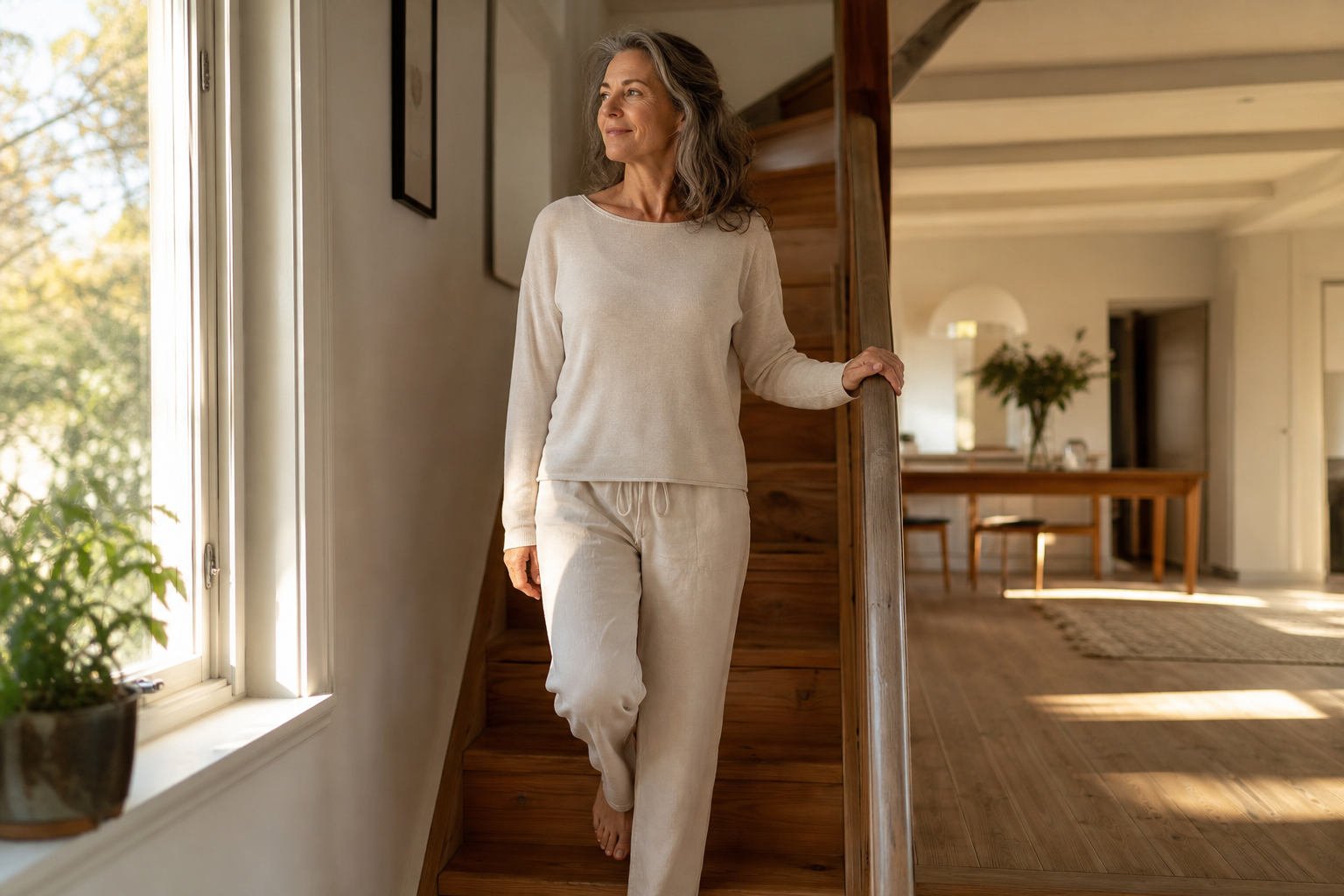
Many people notice a subtle shift when walking up a flight of stairs in their own homes or out in the neighborhood. It is not necessarily a lack of breath, but rather a slight hesitation before lifting the foot, a feeling of tightness in the front of the leg, or a mild wobble. If you have found yourself holding the banister a bit tighter lately, you are not alone. This common daily challenge is often less about overall strength and more about hip mobility after 50, a crucial aspect of physical well-being that directly affects our balance and ease of movement. When our hips lose their natural range of motion, simple activities like climbing steps, stepping over a curb, or even rising from a low chair can begin to feel like a chore. Understanding how this joint functions can help you regain confidence and ease on the stairs.
Understanding How Hip Mobility After 50 Keeps You Moving Safely
The hip is a ball-and-socket joint designed to move in multiple directions. It allows the leg to swing forward, backward, outward, and rotate. However, daily life often keeps us moving in just one direction, mostly sitting or walking in a straight line. Over time, this limited movement can lead to significant hip stiffness. When we climb stairs, the hips must perform two main actions. The front hip must flex deeply to lift the foot to the next step, while the back hip must extend fully to push the body upward. If your joints lack the ability to move through these full ranges, other parts of the body, like the lower back or knees, have to work harder to compensate. This is why addressing hip mobility after 50 is so essential; it protects your surrounding joints from unnecessary wear and tear while improving overall balance.
As the body naturally matures, the connective tissues around the joints can lose some of their elasticity. This process is entirely normal, but it can be accelerated by a sedentary lifestyle. Many adults find that spending hours at a desk or on the couch makes the muscles at the front of the hip, known as the hip flexors, remain in a shortened, tight position. When you stand up to walk or climb stairs, these tight muscles pull on the pelvis, which can throw off your balance and make each step feel heavier. Fortunately, the body remains highly responsive to gentle, consistent movement at any age. By introducing simple, targeted habits into your daily routine, you can encourage the joints to produce more lubricating synovial fluid, which helps soothe stiffness and restore a smoother, more comfortable stride.
Simple Habits to Improve Your Hip Mobility After 50
To help you feel more comfortable and secure on the stairs, here are three gentle daily habits designed to support hip mobility after 50. These exercises do not require special equipment and can be performed safely at home. Remember to move slowly and never push into pain.
1. The Supported Standing Hip Flexor Release
This gentle stretch targets the front of the hips, helping to release the tightness that comes from prolonged sitting. To try this safely, stand near a sturdy wall or a heavy piece of furniture for support. Place your hands on the support, step one foot back into a small, comfortable stride, and keep your back heel lifted. Gently tuck your tailbone slightly under and lift your chest. You should feel a mild, comfortable stretch along the front of your back hip. Hold this position for twenty to thirty seconds while breathing deeply, then swap sides. Practicing this once or twice a day can help relieve hip stiffness and make it easier to extend your leg backward when pushing off a step. If you feel any sharp pain in your knee or lower back, ease out of the stretch immediately.
2. The Controlled Sit-to-Stand
The act of sitting down and standing up from a chair is one of the most effective ways to build functional strength and joint coordination. Choose a sturdy armless chair and sit near the front edge with your feet flat on the floor, about hip-width apart. Without using your hands if possible, press through your heels to stand up slowly and smoothly. Pause at the top, then slowly lower yourself back down to the chair, taking three to four seconds to sit. Repeat this movement five to ten times. This habit works the glutes and thighs while guiding the hips through a controlled range of motion. It is highly beneficial for improving balance and stability on the stairs. If you feel unsteady, place the chair near a kitchen counter so you can lightly touch it for support as you stand.
3. The Side-to-Side Gentle Sway
Because stairs move us in a forward direction, we often forget that the hips also need to move sideways. This simple movement helps lubricate the sides of the joint and supports overall balance. Stand with your feet slightly wider than shoulder-width apart, holding onto a counter or table for stability. Slowly shift your weight to the right side, bending your right knee slightly while keeping your left leg straight. Hold for a couple of seconds, then slowly shift your weight over to the left side. Perform this gentle sway eight to ten times on each side. This lateral movement helps ease tightness in the outer hip and groin. If you experience any pinching or discomfort in the joint, reduce the width of your stance and sway more gently.
Improving Balance and Addressing Hip Stiffness on the Stairs
In addition to these daily movements, paying attention to how you use the stairs can make a big difference. When walking upstairs, try to place your entire foot on the step rather than just the toes. Pressing down through the heel engages the glute muscles, which naturally supports the hip joint and provides a more stable base. When walking down, focus on keeping your chest relatively upright rather than leaning far forward, which can strain the knees and throw off your balance.
As you begin working on your hip mobility after 50, always listen to your body. It is normal to feel a mild stretch or light muscle fatigue, but you should never feel sharp pain, clicking, or deep joint aching. If you experience persistent discomfort, sudden joint locking, or if you feel very unsteady on your feet, it is best to slow down and consult a healthcare professional. A qualified physical therapist can offer personalized guidance to help you move safely. With small, consistent steps, you can help keep your joints comfortable, your balance secure, and the stairs feeling a little more manageable every day.
References
- National Institute on Aging – Physical Activity and Exercise
- Harvard Health Publishing – Exercising to Improve Your Balance
- Mayo Clinic – Balance Training and Mobility Exercises
This blog content is for informational purposes only. For accurate guidance about your personal health, please consult a qualified healthcare professional.
Comments
Post a Comment