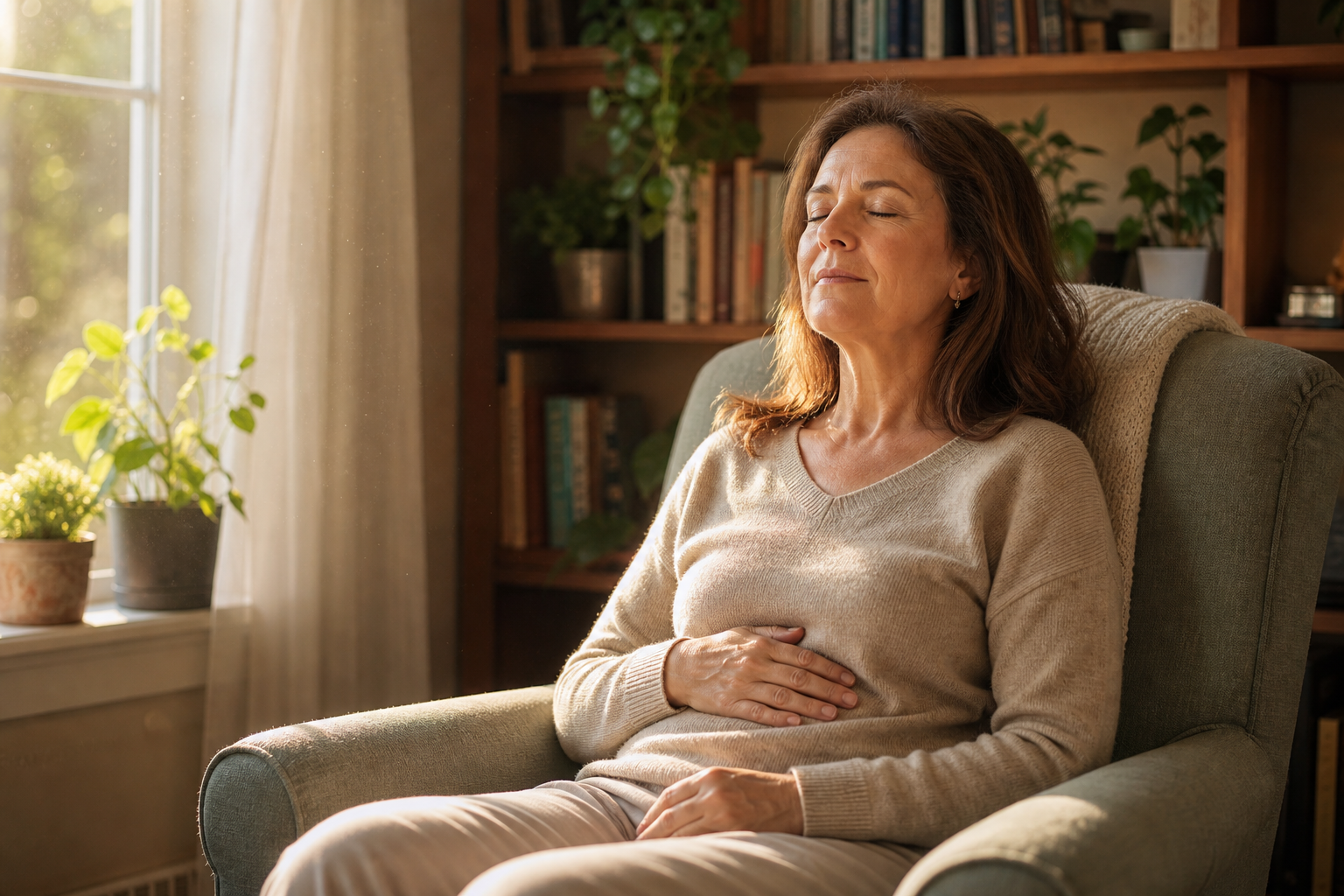
Finding a moment of true quiet can feel surprisingly difficult when juggling family responsibilities, career demands, or the physical changes that occur during midlife. Many people notice that their bodies do not bounce back from daily tension as quickly as they once did. You might find yourself lying awake at late hours with a racing mind, or feeling a lingering tightness in your shoulders after a normal afternoon of running errands. Fortunately, a simple and accessible tool is always available: your breath. Learning specific techniques for breathing for stress after 40 can be a gentle, highly effective way to encourage your nervous system to settle, helping you reclaim a sense of steady calm in just five minutes.
Understanding the Physiology of Breathing for Stress After 40
To understand why a few minutes of conscious breathing can feel so grounding, it is helpful to look at how the nervous system functions. The autonomic nervous system is divided into two primary branches: the sympathetic branch, often called the fight-or-flight system, and the parasympathetic branch, commonly referred to as the rest-and-digest system. When you face a busy schedule, a sudden email, or even physical strain like carrying heavy bags of groceries, the sympathetic system takes charge. Your heart rate rises, your breath becomes shallow and high in the chest, and stress hormones circulate through the body.
While this response is perfectly natural, remaining in this high-alert state for hours on end takes a toll. As the years pass, the natural transition back to a resting state can become slightly slower. This is where intentional breathing for stress after 40 becomes a valuable daily practice. By consciously slowing your respiration and emphasizing the exhale, you send a direct physical signal to the brain that it is safe to downregulate. This simple shift supports overall stress management, encourages better muscle relaxation, and can pave the way for more restorative sleep.
Three Mindful Techniques: Breathing for Stress After 40
You do not need an elaborate setup or hours of free time to experience the benefits of these techniques. Spending just five minutes in a quiet chair or lying on your bed can make a noticeable difference. Here are three gentle approaches to breathing for stress after 40 that you can easily integrate into your day.
1. The Extended Exhale Pattern
This approach focuses on making your out-breath longer than your in-breath. When you prolong the exhale, you naturally stimulate the vagus nerve, which acts as a primary pathway for the parasympathetic nervous system. Some people find this particularly useful in the evening when transitioning from a busy day to bedtime preparation.
To try this safely, sit in a comfortable chair with your feet flat on the floor. Inhale gently through your nose for a count of four, allowing your chest and lower rib cage to expand naturally. Then, exhale slowly and smoothly through your mouth or nose for a count of six or eight. If a count of eight feels too long or causes you to gasp for air, simply shorten it to a comfortable five or six. The goal is a smooth, unhurried release of air. Repeat this cycle for five minutes, allowing your shoulders to drop slightly with each exhale.
2. The Steady Box Breath
Box breathing, or equal-ratio breathing, is a structured technique that emphasizes balance and steady rhythm. It can be incredibly grounding when you feel overwhelmed by a sudden wave of tension, such as before an important presentation, during a difficult conversation, or when sitting in heavy traffic.
Imagine a square with four equal sides. You will inhale for a count of four, hold your breath gently for a count of four, exhale for a count of four, and then pause with empty lungs for a count of four. When holding your breath, avoid tensing your throat or clenching your jaw; keep the posture soft. If holding your breath feels uncomfortable or causes a sensation of anxiety, modify the count to two seconds, or simply skip the holds entirely and focus on an even four-second inhale and four-second exhale. Practicing this for five minutes helps steady the mind by giving it a simple counting task to focus on.
3. Diaphragmatic Belly Breathing
Many of us habitually breathe using only the upper chest, especially when we are rushing or feeling tense. This shallow breathing pattern can reinforce feelings of anxiety. Diaphragmatic breathing encourages you to engage the lower lungs fully, which can improve oxygen exchange and promote deep physical relaxation.
To practice, place one hand on your chest and the other gently on your abdomen, just below your rib cage. As you breathe in slowly through your nose, aim to feel the hand on your abdomen rise gently while the hand on your chest remains relatively still. Exhale slowly, feeling your abdomen fall back toward your spine. This physical feedback helps you shift the focus of your breath downward, away from the tight muscles of your neck and chest. This method is an excellent choice for a midday pause when sitting at your desk or immediately after waking up to start your morning from a place of calm.
Practical Tips for Consistent Stress Management
Establishing a new habit is often easier when it is tied to an existing routine. You might choose to practice your five-minute breathing exercise right after pouring your morning tea, immediately upon returning home from work, or as a gentle transition before turning off the bedtime lamp. Consistency is far more beneficial than duration; a regular five-minute daily practice will support your nervous system more effectively than a single thirty-minute session once a week.
To make the experience comfortable, ensure your posture is supportive but relaxed. You do not need to sit cross-legged on the floor; sitting upright in a comfortable armchair with a small pillow behind your lower back is ideal. Let go of any expectation of clearing your mind completely. It is entirely natural for thoughts to drift. When you notice your mind wandering back to your to-do list, simply acknowledge the thought and gently bring your attention back to the physical sensation of your breath moving in and out.
Knowing When to Practice Caution
While gentle breathwork is generally safe for most adults, it is important to listen closely to your body. If you begin to feel lightheaded, dizzy, or short of breath at any point during these exercises, stop immediately. Return to your normal, natural breathing pattern and sit quietly until the sensation passes. You should never force a breath or hold your breath to the point of discomfort.
Additionally, while these breathing patterns support general stress management and temporary physical relaxation, they are not a substitute for professional medical care. If you experience persistent shortness of breath, sudden chest pain, chronic anxiety that interferes with your daily activities, or severe sleep disturbances, it is essential to consult with a healthcare professional to rule out any underlying medical conditions.
References
- Mayo Clinic – Stress management and relaxation techniques
- Harvard Health Publishing – Using deep breathing to quiet the nervous system
- Cleveland Clinic – Diaphragmatic breathing benefits and instruction
- National Institutes of Health – Mind and body practices for health and wellness
This blog content is for informational purposes only. For accurate guidance about your personal health, please consult a qualified healthcare professional.
Comments
Post a Comment